Phonics explained
What is phonics?
How the sounds of English work: the 44 sounds, the letters that spell them, and how phonics teaches children to read.
Phonics teaches children to read by linking the sounds of English (phonemes) to the letters that spell them (graphemes).
International Phonetic Alphabet (IPA)
Understanding the IPA – International Phonetic Alphabet:
The IPA is a system of symbols representing word pronunciations. Every dictionary employs it, but many are unfamiliar with its usage.
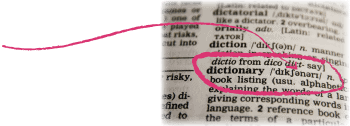
For example, the word “dictionary” appears with funny symbols beside it. These symbols are the IPA, each representing a “phoneme,” a sound unit with meaning.

English contains 44 phonemes, categorized into vowels, consonants, and diphthongs.
Vowels consist of 12 phonemes – 5 long and 7 short sounds.
Consonants encompass 24 phonemes – 15 voiced and 9 unvoiced.
Lastly, there are 8 phonemes in the diphthong group.
Explore the IPA Phonemic Chart with all 44 sounds represented below.
* Sounds can vary with different regional accents
IPA Phonemic Chart
Vowels 12 sounds
Diphthongs 8 sounds
Consonants 24 sounds
The 44 sounds of English. Sounds can vary with different regional accents.
Unraveling Phonemes and Graphemes:
Sometimes, letter combinations create phonemes, and a single letter can represent multiple phonemes!
Feeling a bit puzzled? No need to fret!
Below, each sound is shown with the different ways it can be written.
Let’s break it down for you!
Vowels
The 12 vowel sounds and the ways they are written:
Consonants
The 24 consonant sounds and the ways they are written:
Diphthongs
The 8 diphthongs and the ways they are written:
Blends
Blends are two or three consonants next to each other where you can still hear each sound, such as bl, st and str.
At the start of a word
At the end of a word
Other sounds that join together
These letters or endings stand for two sounds said together, or for a sound spelled in an unexpected way.
Phonics Glossary
Blending – This involves looking at a written word, looking at each grapheme, and using knowledge of GPCs to work out which phoneme each grapheme represents and then merging these phonemes together to make a word. This is the basis of reading.
Digraph – A grapheme containing two letters that makes just one sound (phoneme).
Grapheme – A way of writing down a phoneme. Graphemes can be made up of 1 letter e.g. p, 2 letters e.g. sh, 3 letters e.g. tch, or 4 letters e.g. eigh.
GPC – This is short for Grapheme Phoneme Correspondence. Knowing a GPC means being able to match a phoneme to a grapheme and vice versa.
IPA – The International Phonetic Alphabet (IPA) is an alphabetic system to provide a unique symbol for each distinctive sound in a language – that is, every sound, or phoneme, that serves to distinguish one word from another.
Phoneme – The smallest unit of sound. There are approximately 44 phonemes in English (it depends on different accents). Phonemes can be put together to make words.
Trigraph – A grapheme containing three letters that makes just one sound (phoneme).
Segmenting – This involves hearing a whole word, breaking it into its separate phonemes, and choosing a grapheme to write each one. This is the basis of spelling.